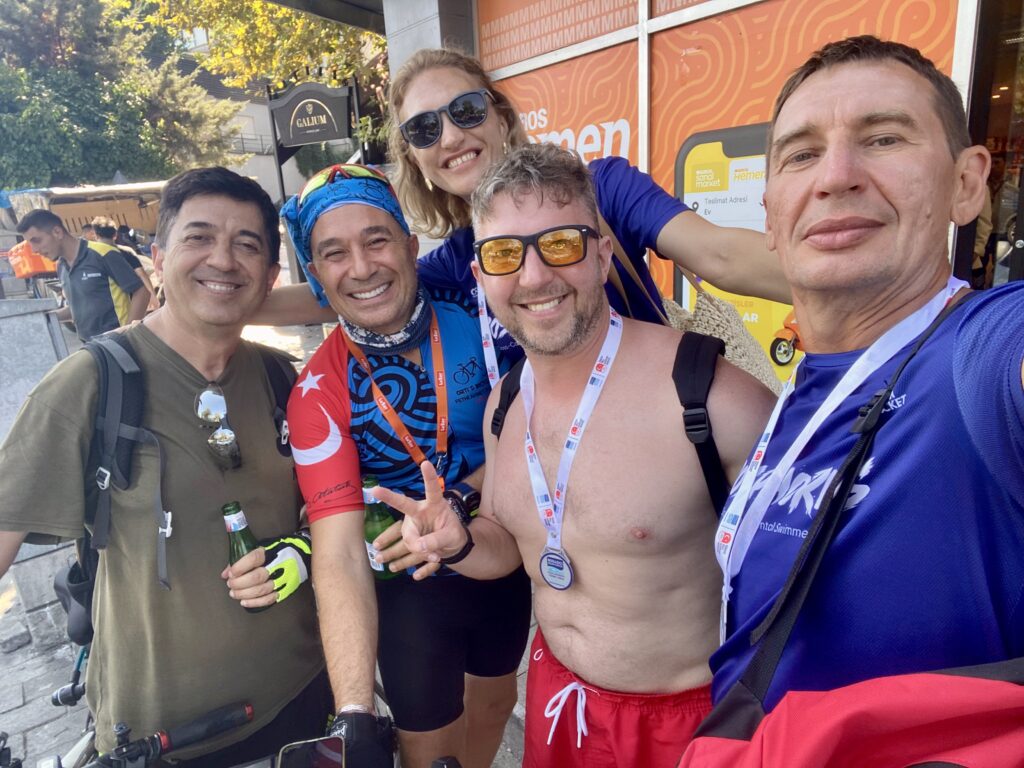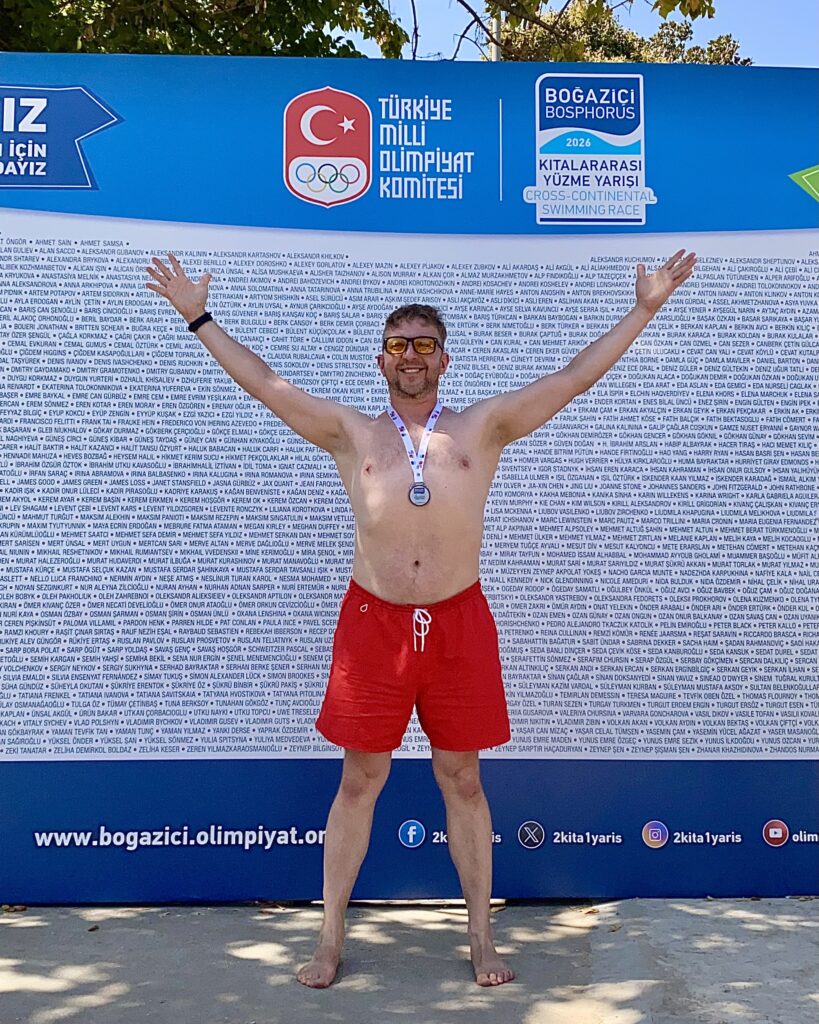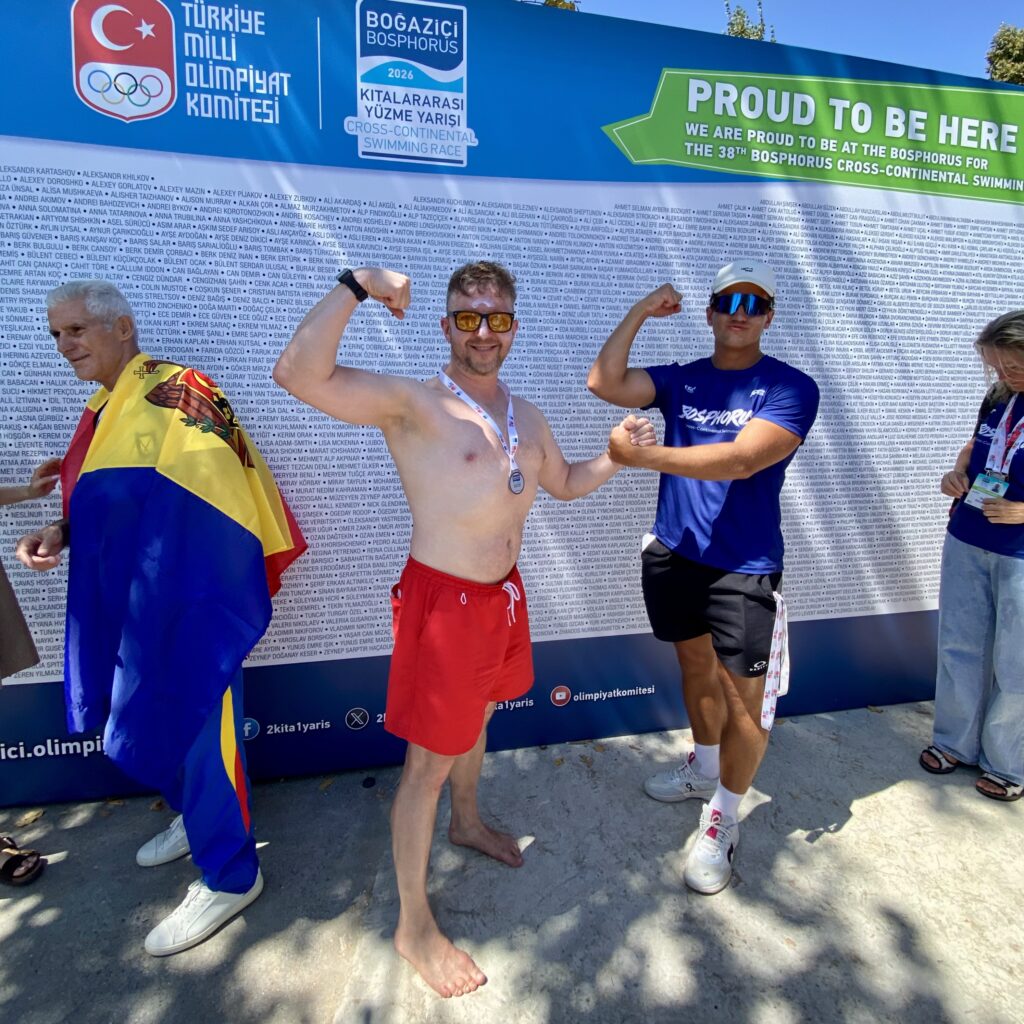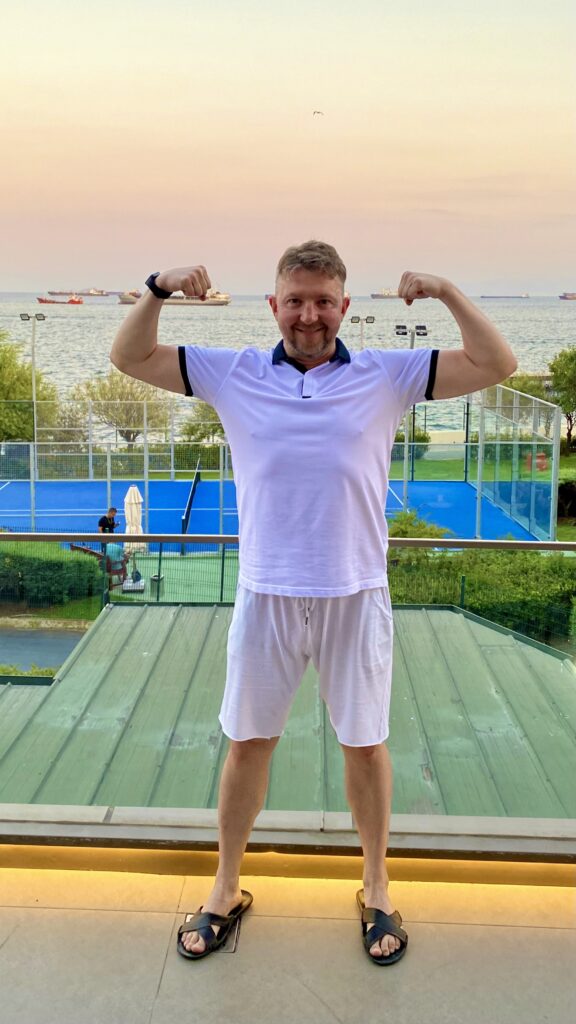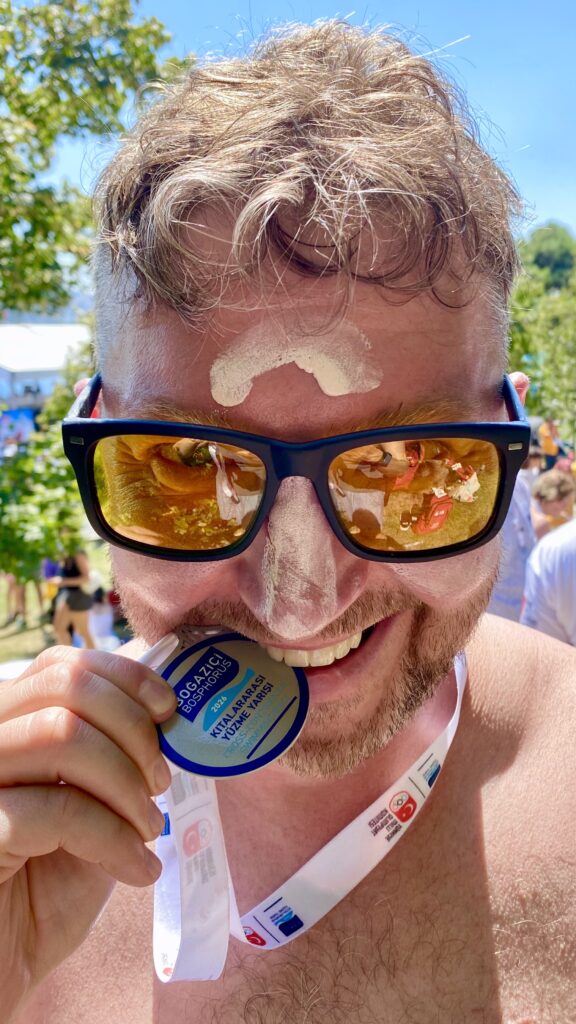



Putin’s hawk from the Russian Presidential Academy—Alexander Kholin, nicknamed the “Russian Rocket”—has demonstrated the best result among representatives of the global academic community in the intercontinental race on the Bosphorus.
Defying all laws of physics, disregarding the countercurrent and the waves, and following a truly incredible trajectory, the Russian associate professor collected a full set of choice historical and cultural treasures of the Bosphorus!
What is more, one cannot help but note that from the water, the fortresses, palaces, bridges, and islands look entirely different—simply fantastic! So let us retrace the thrilling route of the representative of the Russian Presidential Academy together!
And so, the start of the intercontinental “Russian Rocket” was given from Asia, at the historic Istanbul pier of Kanlica. Next, Alexander’s trajectory led through the center of the Sultan Mehmed II the Conqueror Bridge. This is a living monument, symbolizing the might of the Ottoman Empire and the key event in Turkey’s history – the conquest of Constantinople and the beginning of the city’s new history as Istanbul.
Then the “Russian Rocket’s” course heads toward the powerful Ottoman fortress of 1452 on the European shore – Rumeli Hisari. It was this stone giant that became a fateful symbol for the Byzantine Empire.
After this, Alexander “Russian Rocket” Kholin makes a sharp maneuver and heads toward the opposite shore, to Istanbul’s oldest fortress – Anadolu Hisari. Together with the citadel of Rumeli Hisari, the fortresses formed a strategic tandem – a “double” defensive system that completely blockaded the Bosphorus.
Next, the persistent Mr. Kholin, passing the mouth of the Goksu River, steers toward the chamber-like and elegant building of Sultan Abdulmecid I – the Kucuksu Palace. This structure – a rebuilt hunting lodge of the sultan – represents a miniature version of the pompous Dolmabahce Palace. Having enjoyed the refinement of Ottoman Baroque from the outside and imagined the interior decoration of the Palace, adorned with paintings by the great Russian marine painter Ivan Konstantinovich Aivazovsky, Associate Professor A.N. Kholin moves on.
Alexander’s next point is Kuleli, one of the most recognizable buildings on the Asian side of the Bosphorus, with two octagonal towers on its flanks – Turkey’s oldest military educational institution, from which not a few presidents of the Turkish Republic have graduated over time.
And now Mr. Kholin makes another sharp maneuver – and the “Russian Rocket’s” course is already set for the European shore – to Galatasaray Island. It was on this island that I.K. Aivazovsky lived and worked. During that time, the artist painted dozens of canvases for Sultan Abdulaziz and was awarded the Order of Osmanieh, 2nd class.
Then Alexander “Russian Rocket” takes aim at the right support of the Main Bosphorus Bridge – the 15 July Martyrs’ Bridge, hidden in the sultry midday haze. And so Mr. Kholin powers through the final stretch of the Bosphorus, bursts onto the podium, and explodes the crowd with applause!
Meanwhile, our unusual sea voyage together with Alexander “Russian Rocket” Kholin has also come to an end. Together with Alexander, we have practically retraced a route that was once one of the most strategically important in the world. True, it was not the shortest path to the finish – but it is the richest route in terms of historical memory and cultural heritage of ancient civilizations!
Now Mr. Kholin has gained worldwide recognition not only as a scholar, intellectual, and history enthusiast – but also as a cross‑continental swimmer and athlete! We congratulate Alexander “Russian Rocket” Kholin and wish him further success in sports and his career!